
Liquidation: making the right decisions when the business can't continue
When a company can no longer continue, the steps taken before liquidation can make a significant difference. A well-managed liquidation can provide an orderly winding up, deal with creditors transparently and help directors understand their obligations and personal risk.
At HoganSprowles, we guide directors and creditors through the process clearly and practically, so you know what happens next and what your options are before an appointment is made.
Confidential. No obligation. You will speak directly with a partner.
What happens once liquidation starts
The liquidator takes control of the company and becomes the main point of contact for creditors, employees and stakeholders.
The liquidator identifies available assets, secures company records, notifies creditors and assesses the company’s financial position.
Available assets are realised and the liquidator investigates matters such as related-party transactions, director loan accounts, unfair preferences and possible insolvent trading.
Creditors receive updates during the liquidation. If funds are available, distributions are made in accordance with the statutory priority regime.
Step 01
Step 02
Step 03
Step 04
Confidential. No obligation. You will speak directly with a partner.
Which type of liquidation applies to you?
Creditors voluntary liquidation (CVL)
The most common path
A Creditors Voluntary Liquidation (CVL) is initiated by directors and shareholders when a company is insolvent and there is no realistic prospect of restructuring. It allows directors to take proactive steps rather than waiting for creditors to commence court action.
What this means for you:
- Directors can choose the liquidator, rather than having one appointed by the court
- Employee entitlements are dealt with under the statutory priority regime
- Creditors receive a formal, transparent process with clear reporting from the liquidator
Simplified liquidation
If the company has little or no assets, limited records and no realistic prospect of paying creditors, a simplified liquidation may provide a more cost-effective way to finalise the company’s affairs. It is designed for smaller, less complex companies with liabilities less than $1m, where a full liquidation process may not be proportionate.
What this means for you:
- A streamlined process may be available for eligible small companies
- The liquidator completes a focused review of assets, creditors and company records
- It can reduce time and cost where there are no significant assets or complex investigations
- Eligibility should be assessed before appointment, as simplified liquidation is not available in every case
Court (compulsory) liquidation
Have your creditors threatened or commenced legal action?
If your company has received a statutory demand or winding up application, timing is critical. Early advice can significantly improve the options available and may avoid a court-appointed liquidation.
What you need to know:
- You have a limited window to respond to a winding-up application. Act immediately
- In some cases, VA, SBR or informal settlement may still be available if you move quickly
- If liquidation proceeds, the court appoints the liquidator. You have no say in who it is
- If you’ve received a statutory demand or winding up application, do not wait until the deadline approaches. Early action generally provides the greatest number of options.
Members voluntary liquidation (MVL)
For solvent companies
If your company is solvent, meaning it can pay all debts in full within 12 months, but you want to formally close it down, an MVL is the right mechanism. This applies to business owners retiring, groups being rationalised, or projects that have run their course.
An MVL can help shareholders receive pre-CGT reserves as capital rather than dividends, which may reduce tax and preserve more value on exit. Tax advice should be obtained before any distribution is made.
What this means for you:
- All creditors paid in full. You sign a statutory Declaration of Solvency before commencing.
- Any surplus is returned to shareholders (potentially in a tax-effective structure).
- Clean, formal closure. Preferred over deregistration for companies with assets or ongoing obligations.
- Typically completed within 6–12 months, depending on asset complexity.

Frequently asked questions
These are the questions directors most commonly ask when considering liquidation. If you’re under pressure from the ATO, creditors or a winding up application, early advice can help you understand your options before they narrow.
Can I liquidate my company if I owe the ATO money?
Yes. Many companies enter liquidation with significant ATO liabilities. Tax debt is one of the most common reasons directors seek insolvency advice. Liquidation may be appropriate where the company cannot realistically repay its debts and there are no viable restructuring alternatives available.
I’ve received a statutory demand. What should I do?
Act immediately. You have 21 days to pay the debt, negotiate a settlement or apply to have the demand set aside. Missing this deadline can significantly limit your options.
What happens to my employees?
Employees are priority creditors for unpaid wages, super, leave entitlements and redundancy pay up to statutory limits. Eligible employees may also be able to access the Fair Entitlements Guarantee (FEG) where company funds are insufficient.
I gave personal guarantees. Does liquidation affect those?
No. Liquidating the company does not extinguish personal guarantees, and creditors may still pursue you personally. This is one of the key reasons directors should seek advice before a liquidation appointment is made.
Will liquidation affect my personal assets?
Not usually. A company is a separate legal entity, so company debts generally do not become personal debts. However, personal guarantees, Director Penalty Notices and other circumstances may create personal exposure.
How much does liquidation cost?
The cost depends on the size and complexity of the company, available assets and the work required. We provide a clear estimate before appointment and explain how liquidation costs will be funded.
Can I still be a director after liquidation?
Usually, yes. A company entering liquidation does not automatically give you a black mark and prevent you from being a director of another company. Restrictions generally only arise in specific circumstances, such as bankruptcy, disqualification or certain offences.
What happens to company debts after liquidation?
The liquidator realises the company’s assets and distributes available funds to creditors. If there are insufficient assets to pay creditors in full, the shortfall generally remains with the company until it is deregistered.
Can I close my company before the ATO winds it up?
In many cases, yes. If the company is insolvent and there is no realistic prospect of recovery, directors can often place the company into liquidation before creditors commence court action. Acting early generally gives directors more control over timing, communication and the appointment process.
Results that speak for themselves
NSW · Telecommunications
$1.9M in employee entitlements managed through an orderly CVL
A telecommunications contractor was placed into CVL after a sustained decline in revenue made its cost base unsustainable. The liquidation preserved value through the realisation of assets, including a motor vehicle fleet, plant and equipment, and outstanding debtors. Employee wages and superannuation were paid, a 100 cent in the dollar dividend was secured for annual leave, long service leave and payment in lieu of notice entitlements.
- Employees received their priority entitlements and the directors achieved a compliant and orderly business closure
NSW · Manufacturing
Business sale preserves jobs and repays secured lender
A Sydney-based manufacturer was placed into Court Liquidation following financial distress. The Liquidators secured a sale of the business as a going concern, preserving employee jobs, maintaining operations and repaying the secured lender in full. The outcome maximised value for stakeholders and avoided a break-up sale of the company's assets.
- The business was sold as a going concern, employee jobs were retained and secured lender was repaid in full
NSW · Property developer
Solvent group rationalisation
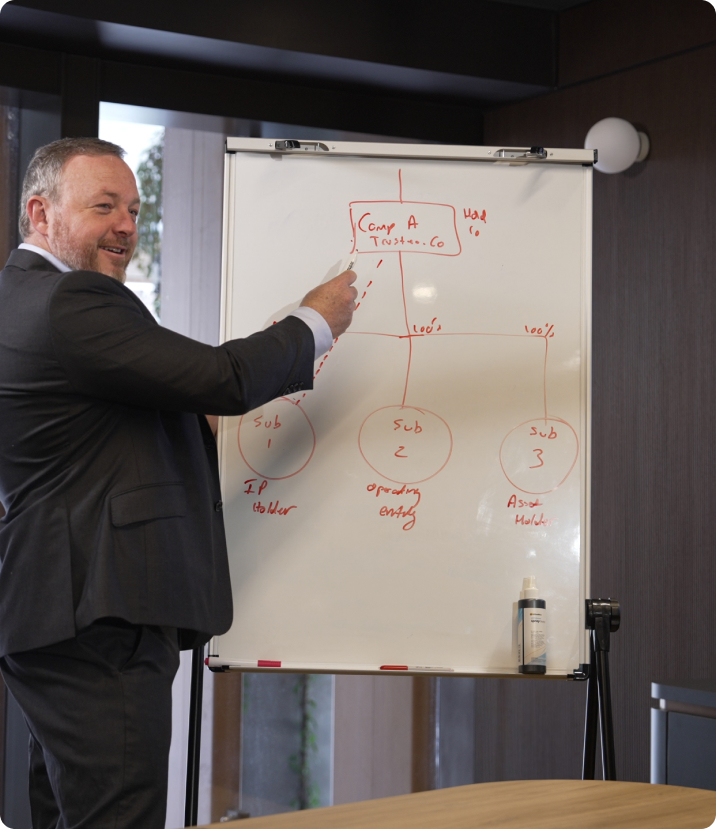
A property development group had completed its projects and no longer required a multi-entity structure. HoganSprowles undertook a Members Voluntary Liquidation across three entities, ensuring all creditors were paid in full and surplus funds returned to shareholders efficiently.
- All creditors paid in full, surplus funds distributed to shareholders and group fully deregistered within 8 months.
Examples are anonymised and generalised. Outcomes depend on the circumstances of each matter and should not be taken as a guarantee of similar results
Experienced advisors.
Trusted leadership.

Christian Sprowles
Christian is a chartered accountant and registered liquidator with more than 20 years of experience across corporate restructuring, insolvency, turnaround and banking. He advises companies, directors, lenders and other stakeholders dealing with financial distress, complex restructurings and formal insolvency appointments.
Known for providing clear, practical and commercially focused advice, Christian helps clients navigate challenging situations with a focus on preserving value and achieving the best available outcome. He has significant experience across voluntary administrations, deeds of company arrangement, receiverships and liquidations.

Michael Hogan
Michael is a Chartered Accountant with over 20 years experience in corporate turnaround restructuring and recovery. He has previously held senior positions as a leading advisory firm and major financial institution in both front end and restructuring. Michael has also completed a masters in applied finance, is a member of the Institute of Chartered Accountants (ICAA) and Australian Restructuring, Insolvency and Turnaround Association (ARITA).

Brendan Copeland
Brendan is a certified practising accountant (CPA) and registered liquidator with more than 20 years of experience in restructuring, turnaround and corporate insolvency. He has held senior positions with leading advisory firms and financial institutions, advising directors, creditors and stakeholders across a broad range of restructuring and recovery matters.
Known for his practical and commercially focused approach, Brendan assists clients navigating financial distress, formal insolvency appointments and complex stakeholder situations. He is a member of CPA Australia and the Financial Services Institute of Australasia (FINSIA).

Mark Brereton
Mark is a chartered accountant with more than 15 years of experience advising stakeholders on corporate restructuring, turnaround, insolvency and business advisory matters. Having worked with leading global accounting firms, he assists directors, lenders and stakeholders facing financial distress, operational challenges and complex restructuring situations.
Known for his pragmatic and commercially focused approach, Mark works closely with clients to develop tailored solutions and achieve practical outcomes. He is a member of Chartered Accountants Australia and New Zealand (CA ANZ) and the Australian Restructuring Insolvency and Turnaround Association (ARITA), and holds postgraduate qualifications in law and advanced insolvency.

Angelo Cadiz
Angelo is a Chartered Accountant with over 10 years of experience in informal and formal restructuring at HoganSprowles.
Angelo has a variety of experience in voluntary administration, deed of company arrangement, liquidations, receiverships and various informal restructuring and advisory engagements.
Angelo assists clients and stakeholders in distressed situations across a broad range of industries including hospitality, property, technology start up’s, professional services, education and construction.
Not sure what ? to do next
If your company is facing ATO debt, creditor pressure, statutory demands or a winding up application, early advice can make a significant difference.
Speak directly with a HoganSprowles partner to understand your options and obligations before making a decision.
