
Small business restructuring: Reduce debt while retaining control of your business.
Financial pressure doesn’t always mean formal insolvency. Small business restructuring allows eligible companies to deal with historic debt through a creditor-approved plan while directors remain in control of day-to-day operations.
HoganSprowles helps directors assess eligibility, develop restructuring plans and guide businesses through the SBR process with practical, commercially focused advice.
The small business restructuring process
Small business restructuring provides a formal yet streamlined pathway for viable businesses to deal with debt while continuing to trade.
Step 01
Eligibility assessment
We review your financial position, liabilities, tax compliance and business viability to determine whether SBR is available and appropriate.
Step 02
Develop the restructuring proposal
We work with directors to prepare a restructuring plan that offers creditors a better outcome than liquidation.
Step 03
Creditors vote
Creditors review and vote on the proposed plan while directors remain in control of the business.
Step 04
Implement the plan
Once approved, the company continues trading while making payments under the restructuring plan.
Not sure if you qualify? We can assess eligibility during a confidential consultation.
Confidential. No obligation. You will speak directly with a partner.
Understanding small business restructuring
When would a director use this?
SBR is designed for eligible small businesses experiencing financial difficulty where the underlying business remains viable. It provides an opportunity to compromise debts while allowing directors to retain control of day-to-day operations.
What does it do?
- Directors remain in control of the business
- Existing debt can be compromised through a creditor-approved plan
- The business continues trading during the process
- ATO and other unsecured debts can be included
- Generally more cost-effective than voluntary administration
- Provides a structured pathway forward for viable businesses
Is SBR right for your business?
SBR may be suitable where:
- The business is still generating revenue
- Debt levels have become unsustainable
- ATO liabilities have accumulated
- The company remains commercially viable
- Directors want to avoid voluntary administration or liquidation
Voluntary Administration
When would a director use this?
Voluntary Administration (VA) is appropriate when a company is insolvent or likely to become insolvent — and the director believes there may be a better outcome than immediate liquidation. It provides breathing space to assess options.
When would a director use this?
- Moratorium on most creditor action and legal proceedings
- Restrictions on secured creditor enforcement
- Director duties suspended during administration period
- Opportunity to pursue DOCA as a rescue mechanism
When would a director use this?
Week 1
Administrator appointed. Control of company transferred. Moratorium takes immediate effect.
Week 2
First creditors’ meeting held. Committee of inspection formed if required.
Weeks 3-4
Administrator investigates company affairs. DOCA proposal developed if viable.
Week 5
Second creditors’ meeting. Creditors vote: DOCA, liquidation, or return to directors.
Deed of Company Arrangement (DoCA)
A Deed of Company Arrangement (“DOCA”) is a formal proposal generally submitted by management (or an interested party) prior to the second meeting of creditors in a Voluntary Administration. The general reason for a proposed deed is the expectation of financial benefit to the parties compromising or modifying their rights.
The expected financial benefit may be generated by one of the following:
- Continue trading to generate a profit for the company and the creditors through continued supply;
- Modify creditor claims to assist with working capital to restructure the company;
- Taxation advantages to carry forward tax losses in the corporate structure;
- Restructure the company through a merger or reorganisation;
- Take-over or sale of the company as a going concern;
- Avoiding liquidation.
Should management (or an interested party) wish to submit a DOCA proposal, the terms of the proposal are at the discretion of the party submitting the DOCA. While the DOCA may include contributions over a period of time, and / or a lump sum amount on the achievement of a milestone (e.g. sale of an asset), in order to establish a Deed Fund for the distribution to creditors.
If a DOCA is proposed prior to the second meeting of creditors, the administrator will provide their opinion on the DOCA proposal in comparison to a liquidation scenario.
Creditors will then have an opportunity to vote on the future of the company, and any DOCA proposal, at the second meeting.
Small Business Restructuring (SBR)
On 1 January 2021 the Federal Government made changes to the insolvency framework in Australia to better serve small businesses, their creditors and employees with the introduction of small business debt restructuring.
The process allows for financially distressed small business to access a single streamlined process for restructuring their debts, while allowing the owners to remain in control of their business.
All of our Partners are small business restructuring practitioners and with our guidance the regime can be used effectively to support small business survival, meaning better outcomes for businesses, creditors, employees and the economy.
As small business restructuring practitioners we oversee the restructuring process and work with you to develop a debt restructuring plan and restructuring proposal statement.
We appreciate the challenges for small business and have developed a cost effective framework that enables small business to restructure. This has been a challenge in the industry as restructuring has been outside the reach for many small businesses.
To be eligible for small business restructuring the company must:
- be incorporated under the Corporations Act
- have total liabilities which do not exceed $1 million on the day the company enters the process (excludes employee entitlements).
- resolve that the company is insolvent or likely to become insolvent at some future time
- appoint a small business restructuring practitioner
Frequently asked questions
These are the questions directors most commonly ask when considering a Small business restructuring.
What is small business restructuring?
SBR is a formal process that allows eligible companies to compromise debts while directors remain in control of the business. It is designed to help viable small businesses deal with historic debt and continue trading.
Do I lose control of my business?
No. Unlike voluntary administration, directors generally remain responsible for the day-to-day operation of the company throughout the restructuring process.
Can the business keep trading?
Yes. Most businesses continue trading while the restructuring proposal is prepared and voted on by creditors.
Can I write off ATO debt?
Yes. ATO debt is commonly included in restructuring plans and is often one of the primary reasons directors explore SBR.
How much debt can be reduced?
Every restructuring is different. The amount creditors may agree to compromise depends on the company’s circumstances, future viability and the return available compared with liquidation.
Will creditors approve the plan?
Creditors will generally consider whether the proposal provides a better outcome than liquidation. A realistic and commercially supported plan usually has a stronger prospect of approval.
Is my business eligible?
Generally, a company may be eligible if it is insolvent or likely to become insolvent, has liabilities within the statutory threshold and meets the relevant legislative requirements.
What happens if the plan is rejected?
Other restructuring options may still be available, including Safe Harbour, voluntary administration or liquidation depending on the circumstances.
How much does SBR cost?
SBR is generally more cost-effective than voluntary administration because directors remain in control and the process is more streamlined.
We provide a clear estimate before any appointment is made.
Experienced advisors.
Trusted leadership.
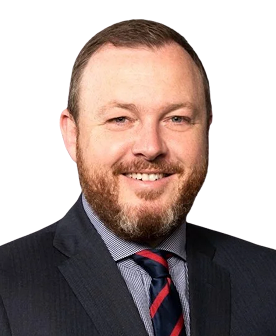
Christian Sprowles
Christian is a chartered accountant and registered liquidator with more than 20 years of experience across corporate restructuring, insolvency, turnaround and banking. He advises companies, directors, lenders and other stakeholders dealing with financial distress, complex restructurings and formal insolvency appointments.
Known for providing clear, practical and commercially focused advice, Christian helps clients navigate challenging situations with a focus on preserving value and achieving the best available outcome. He has significant experience across voluntary administrations, deeds of company arrangement, receiverships and liquidations.

Michael Hogan
Michael is a Chartered Accountant with over 20 years experience in corporate turnaround restructuring and recovery. He has previously held senior positions as a leading advisory firm and major financial institution in both front end and restructuring. Michael has also completed a masters in applied finance, is a member of the Institute of Chartered Accountants (ICAA) and Australian Restructuring, Insolvency and Turnaround Association (ARITA).
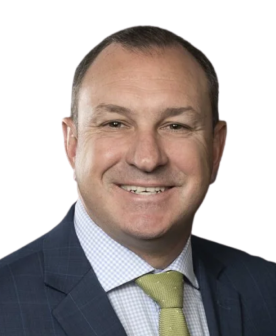
Brendan Copeland
Brendan is a certified practising accountant (CPA) and registered liquidator with more than 20 years of experience in restructuring, turnaround and corporate insolvency. He has held senior positions with leading advisory firms and financial institutions, advising directors, creditors and stakeholders across a broad range of restructuring and recovery matters.
Known for his practical and commercially focused approach, Brendan assists clients navigating financial distress, formal insolvency appointments and complex stakeholder situations. He is a member of CPA Australia and the Financial Services Institute of Australasia (FINSIA).

Mark Brereton
Mark is a chartered accountant with more than 15 years of experience advising stakeholders on corporate restructuring, turnaround, insolvency and business advisory matters. Having worked with leading global accounting firms, he assists directors, lenders and stakeholders facing financial distress, operational challenges and complex restructuring situations.
Known for his pragmatic and commercially focused approach, Mark works closely with clients to develop tailored solutions and achieve practical outcomes. He is a member of Chartered Accountants Australia and New Zealand (CA ANZ) and the Australian Restructuring Insolvency and Turnaround Association (ARITA), and holds postgraduate qualifications in law and advanced insolvency.

Angelo Cadiz
Angelo is a Chartered Accountant with over 10 years of experience in informal and formal restructuring at HoganSprowles.
Angelo has a variety of experience in voluntary administration, deed of company arrangement, liquidations, receiverships and various informal restructuring and advisory engagements.
Angelo assists clients and stakeholders in distressed situations across a broad range of industries including hospitality, property, technology start up’s, professional services, education and construction.
Examples of small business restructuring in practice
NSW · Hospitality
Business restructured while trading continued
A hospitality business burdened by accumulated tax debt and supplier arrears implemented an approved restructuring plan, allowing the company to continue operating and preserve jobs.
- ATO debt addressed through a formal plan which saved $700,000, employees retained and Business continued operating
NSW · Technical Services
Legacy debt compromised through a restructuring plan
A technical services business experienced cash flow pressure and increasing tax liabilities despite maintaining a strong customer base. A restructuring plan was approved, allowing the business to continue trading while addressing historic debt.
- Operations preserved and significant legacy debt compromised.
VIC · Construction
Viable business preserved through SBR
A construction company entered SBR after a period of rapid growth created unsustainable creditor balances and tax arrears. Creditors approved a restructuring proposal that enabled the company to continue operating and complete existing projects.
- Business preserved and creditor pressure stabilised.
Examples are anonymised and generalised. Outcomes depend on the circumstances of each matter and should not be taken as a guarantee of similar results.
Not sure where to start? Talk to us.
Every engagement begins with a confidential conversation. No obligation. No cost. You will speak directly with a partner.
